Sliding Rock Creek Trip 1973
By WARREN Drafts:1 2019 and 4 4 Nov 2023, and edited 28 Jan 2024.
1 INTRODUCTION It seems strange to look back on the experiences of life and how they have impacted on your values and what you like and do, and especially on one of the key things that have happened in my life that is truly life changing.
Many people find it is the birth of their first child, success in sport or at school. For me it was one car trip. It was outback from Sydney to the Flinders Ranges, for about 3500 km over 8 school holidays in 1973 as a 17 year old boy with Mum, Dad and my younger brother Roger. It turned out to be a very challenging and educational adventure for us all.
This story is true and I have endeavoured to not embellish it. To be honest, I just don’t need to. Anyone who went through this experience would be changed.
Anyway, I hope you like this escapade or adventure, and understand that I have not altered the facts to reflect modern values. I apologise for any people who may be offended.
The values and actions described in this story reflect the times. It is a good example of what has changed, and more importantly what has not changed.
2 FIRSTLY A BIT ABOUT MY FAMILY
.1 Dad was brought up in Coburg, an outer northern suburb of Melbourne in a family that allowed for experimentation, and casual approach to bringing up children. Dad’s father became a pie and cake shop cook during WW II , and earlier was an engraver who engraved the Caulfield Cup on one occasion, and was out of work for over a year during the depression.
WW II impacted on all people who lived through it. Dad was young at the time and did not go overseas to fight. However when 18 in 1944 he did join the RAAF where he trained as a Flight Mechanic, and then helped repair Beaufort bombers at East Sale in the Victorian Gippsland. Dad always said the scariest thing he did was his first flight to a test a bomber he helped replace two engines. He could only remember 7, not 8, split pins on bolts to hold on the engines. His mates said he was mad, and years later he learnt that about 200 persons, mainly aircrew, were killed there in less than 4 years.
As an impressionable 18 yr old, Dad also said his time alongside people from all backgrounds and experiences was a great experience; and he learnt much about engines but more about the value and differences of men and mates and the huge risks taken by aircrew. In his short time there, he saw a bomber crash and crew of 4 killed; and 2 other bomberscrashed with loss of crew, but then the word “risk” was unknown.
This impacted on my Dad, for one thing, he learnt that there is merit in all people, that respecting people from all backgrounds, not being classist. They all swore, drank and were rowdy. He had learned to lie, cheat and swear – and when not to do these. What a life for a young man to learn about the world. As you will see these attributes have stayed with dad.
.2 Mum was born into a loving, conservative family who moved to Coburg next to dad when she was 9. As a young child she experienced the difficulties in the Great Depression, with child diseases and her dad’s financial problems and then the effects of WW II
As a young woman, mum started work in 1943 in the ES&A Bank in Collins St, Melbourne. During that time she made friends that stayed with her until she died in 1991.
Mum had asthma since early diphtheria and had been sensitive to dust, change in temperature, paint etc. We always suspected that the use of strong smelling oil paints used in the Bank refurbishments triggered an increased respiratory sensitivity that eventually contributed to her unexpected early death..
Mum did a great job and taught us all a lot of things which helped me, and I am sure dad and my brothers, Winsome and many others.
.3. Mum and Dad lived next door to each other when they were 9 and 10 years old. As children they played together; however their lives drifted away when they were teenagers with new jobs in 1943 and Dad had earlier moved to North Coburg.
Mum was in demand and got the attention of boys and she dated a number. Dad always was there in the background. He loved her from when they first met. He did not give up and kept in contact with Mum during the war.
The pivotal moment when Mum realised that she loved Dad was in 1946 after an Aussie rules match that Dad was playing in. Dad was fast and mobile. He went to pick up the ball, got hit very hard, was knocked out, broke his collar bone that pierced his lung and was ambulanced to hospital.
Mum went to see dad at the hospital, and was aghast at the lack of attention given to Dad. They discounted the seriousness because it’s “just a sports injury” (on a busy Saturday night). However that was the seminal moment. From then on Mum and Dad were an item.
Following the war, many ex-service personnel were given the opportunity to study and acquire qualifications. Dad did not want to continue as a clerk and seized this opportunity and was very lucky to enrol at Melbourne University in 1946 for a 4 year Bachelor of Mechanical Engineering.
Mum and Dad married in February 1949 and slept on her parents partly enclosed back verandah with only a mattress for the first 2 months until dad built a bed – bigger than the one he did in the RAAF. During this time they had no assets and actually had debts for the 4th year of the Uni course. Mum, being married, was required to leave the bank to make way for ex-servicemen, and so looked after her sick mum, her dad and Stan. Things were tight, but they were very happy. At the end of 1949 dad graduated in Wilson Hall and I can still look at the drawing he did of it (see photo 1 Appendix B) It is amazing in the detail. Unfortunately the Hall was later destroyed by fire.
I guess Mum and Dad were very much in love, dad studying and mum became pregnant in 1949 with Greg. There is a great photo (see Appendix B) of mum by dad in the snow at Mt Matlock on a 3 day trip by trains and mail-coaches to Mansfield, and Wood’s Point.
E). Dad recalls that they hitch-hiked to Mt Matlock and were very lucky getting back to Woods Point that night. They didn’t think of the big risk with the snow.
.4 Greg my older brother was born in April 1950 and in his 1st 3 years was brought up largely by Barb and her mum and dad.
My Dad tells one night Mum suddenly woke him in a panic because Greg was not in the bassinet next to her. He was found in the small space next to Mum on the verandah wooden floor. Dad and Mum had slept on a mattress on the floor but weren’t trying to toughen up a 3 month old boy. You do funny things when very tired.
Also Dad recalls a trip to the local tip to dump something when Greg grabbed a battered toy “truckie” which had to came home and was completely restored. Dad didn’t get all our presents that way; but had passed on genes as he made lots of things from scrap.
See “Barb-Stan Upsetting Barb” for Dad nearly cutting off Greg’s finger when3.; and “Stan Trips” for Greg’s first bush camping experience when 6 or 7 and no car.
.5 Move to Heathmont It became a growing need for Mum and Dad to move out of the verandah and live their own lives. Greg had been born in 1950 and 2 years later Mum almost lost her life due to a ruptured ovarian cyst. Luckily the blood loss into her abdomen was showed to dad by blue lips and she was saved by ambulance and doctors. There was doubt about more children. Money was still tight and like any young family, the only properties were far out away from the city. They picked Heathmont, 20 km East of Melbourne as their place for their first home in 1953. There was a railway station reasonably close; and typically dad and mum selected the block even though none of today’s essential services were available except for a dirt road. However it had a lot of trees which both loved. (Unfortunately it had a lot of snakes, one of which Mum diced at the back door).
Dad now proudly describes the great developments, friends and times there, cricket, and including the neighbours and Dad help organizing the building of the bitumen access road some 300 metres to cut out dust.
Dad being an engineer by now, with a strong practical skills and just do it approach designed the house in Heathmont with large input from Mum. It was a small (100 sq.m) three bedroom timber house with asbestos cement roof, built on a sloping block and gradually later with fences , path, drive, retaining walls and a separate garage. Dad had tested the ground, got special approval and largely installed a septic tank sewer system.
As with everything Mum and Dad did, they looked for options that serve a need. Mum had by then Greg (born 1950) and would need to keep an eye on him, whilst doing cooking in the kitchen. They designed an open kitchen that doubled for a dining room, a play area for kids, an open fire for heating and power failures. A true family room. This concept was groundbreaking, and based on Dad’s mates country practice where the kitchen was the most used place especially in Victoria, and on Prof Gropius a famous USA architect saying his biggest mistake was after coming home from work separating from his wife in the kitchen while he had a drink in the lounge. Virtually all houses in that time separated the cooking from the living areas. This was probably the influence of the English designs and ideologies of class.
The house was also solar designed with windows and eaves using CSIRO data to give 5m of sun on the kitchen floor in mid winter and nil in mid summer. It was built via War Service Homes which only required 5% deposit of the land which cost £130.
Melbourne in wintertime can get quite cold, most houses including ours, had a fireplace. This was the most effective way of heating in many of those days. We used brickets, compacted brown coal. Another innovation dad built into the house, as always by a need and practical purpose, was to have one fireplace that faced the kitchen/rumpus room/family and the lounge room. There was a metal plate at the back of the fireplace that could be moved to draw heat to the lounge room.
.6 Warren. Enter 1956, I was born in June in the Pines private hospital in Ringwood, east of Melbourne. It was demolished some time ago, most of my friends say it was because of me.
Mum’s pregnancy with me was problematic as she had scarlet fever during this time. This and/or the long delay after my birth resulted in some issues that were to surface some 12 months later. Mum and dad were concerned that I was still crawling, and following discussion with doctors I was diagnosed with Cerebral Palsy. This is a condition where some impediment to brain development before I was born or shortly after.
Cerebral palsy occurs when there is some stress in pregnancy or birth. It limits the development of the brain. As with strokes or acquired brain injury, the impact can vary in and the range of functions it restricts. Coordination and muscle control are areas that I have problems. There is a signal that triggers a muscle on and another to turn it off. My messages get mixed up due to the limitations of the motor part of my brain.
Mum and Dad were devastated; they didn’t know what the impact would be. I can still recall mum telling me of her angst at visiting the Melbourne Children’s Hospital to help with my condition. Whilst there, she would see many children with cerebral palsy who had significant limitations. It must have been very hard for her to not think ahead and expect the same problems with me.
To help overcome this I needed therapy regularly, this was mainly physiotherapy to get my brain to use different parts to control muscles.
In 1958 Mum was pregnant again with twin boys. I do not know too much about this time as it was and still is a difficult topic to talk about. Mum miscarried at about 14 weeks and Dad was midwife. He did not show Mum the boys and buried them in the back among our beloved trees. I am sure this gave a lot of grief. And their need to have another child was not on their plans, they were a bit spooked because of my birth and the impact of the miscarriage.
.7 Roger Anyway in September 1959 mum became pregnant again. I can only imagine the worry that this may have caused. Dad later said Mum wanted an abortion and he investigated with his great friend Dr Bill Elrick, but they agreed to take the risk. Much to their delight, Roger was born in June 1960. He was born black and blue, I guess through bruising, was jaundiced and a complete transfusion was threatened but did not happen. For 3 months he had trouble taking milk due to his injured jaw, which made sleeping problems for Mum (and dad).
It was great I had a play mate. Greg was 6 years older and had his own friends by 10.
.8 Move to Sydney (also see separate story)
In early 1962 we all moved to North Epping, a north western suburb of Sydney, instead of moving to Canberra with the Navy, for Dad to take up a new job at Standards Australia. The move was also precipitated by the need for mum to get into a warmer climate, as Melbourne winters were longer and more severe. The location was selected to help both Mum and me.
I can still remember the move and my first plane trip. It was with TAA airlines, a DC3. I got the window seat when Mum, Roger and I flew to Sydney. It was so exciting, even now I can visualise it. Dad and Greg drove up in the old Holden FX. During that road trip dad and Greg had to sort out a broken timing gear which delayed them a day. They had to share a single bed at Goulburn due to lack of £.
North Epping is a cul-de-sac part of the Shire of Hornsby You don’t go to anywhere else when you go to North Epping. There’s only one way in, one way out. They selected the property in a spot to make it easier for me to go to school as when a young boy mum actually carried me to school. It was straight opposite to our home at 88 Boundary Road.
Mum and dad made a very conscious decision to put me in a regular school. They considered that to make my life as normal as possible equipped me best for life. At this time it was a bit radical. I am forever thankful for this. Teachers at North Epping and Epping Boys HS helped a lot.
.9 Dad’s Work Dad was and still is, an expert in welding and pressure equipment and their Standards . This job involved collating best practice, experience and knowledge of most aspects of welding to help ensure new pressure vessels would be safe and world class. This helped him when Chief Inspector of Boilers in 1978-89 and later a Director of Cryofab Engineering. Dad has an intensely logical and systematic mind that always wants to grow and learn, (even now aged 97 he is still the same).
During this period, Mum until her death in July 1991 greatly helped Dad in his work in many ways including typing, checking and use of the new computer – and raising us 3 kids and looking after finances, tucker, and enabling camping trips in so many ways. She was a Pink Lady at Concord Hospital, did a fantastic job, is greatly missed by Dad and us all , and earned half of the OAM awarded dad in 1994.
3 DAD & MUM’S CARS
.1 FX. Dad and Mum did not get their first car until 1958/9 when 32 and 31. They had saved money and realized how helpful a car would be for travelling with two kids, Greg and me to family, friends, hospital or work. Also it would help make trips to see Australia much easier for us all.
The Australian car to have, at that time, was a Holden FJ or later models. We got a third-hand mid green Holden FX, the first model produced. It was Australia’s pride and joy. A testament to the country’s fledgling post-war industrial growth.
We had many good times in that car, I can still remember with joy dad picking Roger and myself up from Sunday school at All Saints Church of England located about 600 metres from home, around the block. A bit too far for me to walk at that age.
Dad would not just take Roger and myself, we had a number of young kids in the car. It was a great adventure. Dad would drive us down the local fire trails. North Epping is surrounded on three sides by bushland. Fire trails were rough unsealed roads mainly prepared cheaply to allow four wheel drive to get close in the event of a bush fire and access transmission towers. We really only went down the trails some 400 to 500 metres but to us kids we thought it was exciting and a little dangerous. Dad had great joy in going out of the ordinary, being a little daring. Roger and I loved it.
I think that Mum and Dad then realized how a car helped compensate and make life easier
That Holden was a classic, I can still remember the number plate CPV 663. We went on numerous trips in it. On hot days all of the windows were open; it had no heating or air conditioning. After we moved to Sydney in January 1962 we all travelled back to Melbourne in Christmas holidays to visit Mum and Dad’s parents, relations and friends. We camped on the way and came back all different routes. Once it was so hot we stopped and all jumped in the Cann River to cool off.
After a main spring broke on a hot Australia Day coming back from Melbourne and needed replacing by dad with one from a scrap yard,he and Mum decided that the poor old car was on its last legs and we needed a more reliable car. (In driving to Sydney on 3 occasions we had big problems – more stops for oil than petrol, broken main rear off-side spring and busted timing gear, and later much time fixing rust holes). Also as all 3 boys grew it got very uncomfortable in the back seat. In about 1969 he sold the old car to a young bloke who was keen on cars and had the time to get it up to some reliability. Dad sold it for some peppercorn amount of $50-$100. Even then I thought buying a classic old Holden for that price was a bargain. It is such a rare thing to get a good car body that is straight to do up as a veteran car or to hotrod.
.2 FH or HR ? Dad then bought a 2nd-hand 1966 Holden – I think it was light grey. This car was a lot more modern and provided a much more reliable service. We didn’t have the car for too long, probably for a couple of years. It was stolen when parked at Eastwood! It was amazing, we did not expect it; and it was somewhat inconvenient. Yet again dad had to get and find a car to serve our needs.
.3 HK What do you think we bought next, yes it was another Holden! This time it was a 2nd-hand classic 1969 Holden Kingswood. This car was to serve us really well and was the one we were going to travel in on this our third trip.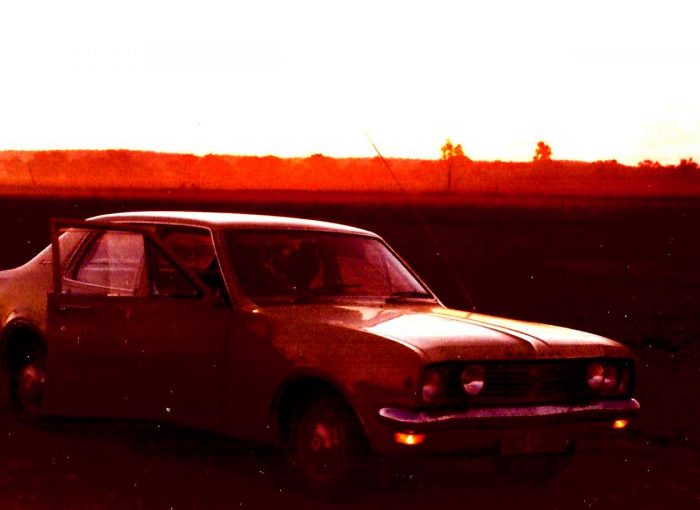
Fig 1. HK car before Sliding Rock Creek trip (see also photo 2 Appendix C)
Mum and Dad gradually had it modified. It was a tan brown colour, intentionally, a sedan with a 186 cubic inch red block motor and had heating but no aircon. Part of dad’s ethos and engineering background influence all things he did. It was not just that a thing be useful, it also needed to if possible have another use. So, the car had to have another use eg sleeping in the car with mum. I remember travelling along Victoria Road Gladesville to a small car service centre. Seats in many of the cars in the 70’s were not the snug, comfortable seated as we have in cars to today. You could up grade to bucket seats in the front. Unfortunately our car had one large bench seat with very limited shaping and lateral support for the passengers. Vinyl not leather, the bench seat could not recline, so you had to grin and bear it. Why not get the bench seat to recline, you could then sleep into there with screens or mosquito nets stuck in doors over open windows in hot mossie weather.
In the months before the trip dad made sure that the car could handle the conditions. He got the front bench seat modified so it could become a layback seat that could double as a bed for 3 (later on I used to joke that this feature turned a normal family sedan into a disguised panel van “a sin bin”). This feature proved to be really handy.
Mum and Dad also got seat belts in the back which once probably saved two broken necks when hitting a huge bump. Later a whip aerial was added for listening to “Blue Hills” and as a safety device for crossing remote big sand dune country, and when rising up from low level dust roads to pass over cattle grids. Sometimes when on the low level road we could see an aerial pass on the other low level side.
Dad was also obsessed with ensuring the car had good ground clearance to avoid damage that could disable it. To help with this dad later installed air-ride shock absorbers. These were normally used to keep a motor vehicle in a flat position when towing a caravan or trailer. For us though it was to keep elevated the sump and petrol tank, behind the rear axle, and be able to handle big holes on outback unmade roads or off-road. In one trip it, with the oil drip tray, made the difference between slight damage and disaster in a crash over rare rocks 100 km south of Birdsville. The engine oil drip tray also helped through the floods. Air conditioning would have been good when driving into the sun on a 40C day.
4 TRIP ENTHUSIASTS. From the above it can be seen that we were camping and outback enthusiasts and had gained quite a bit of good and bad experience before this our biggest trip at the time and into our unknown.
I think we all, especially dad, looked forward to getting out of the big smoke and beyond the the fence lines. “Don’t fence me in “ was a song he knew from cowboy days.
We had been out to Bourke and down the Darling River to Wentworth and thought about a bit further west into the Flinders Ranges. We got maps and all discussed it – democracy. We all thought it a good idea and timing. At that time Greg at 23 had recently married and was at work. Four in the car was ideal for a 3500 km car trip outback to the Flinders Ranges)
5 PLANNING FOR THE TRIP. Figure 3 shows the planned and actual routes of this trip which would give us a look at South Australia. It would also give us a chance to see some of Australia’s great national parks and we all would learn a bit and get some dust to remind us later. The trip would be about 7 days and 3500 km.
Dad later said a mate of his was apprehensive of going a little way outback and he told him don’t worry , treat it as an adventure and it’s likely some thing will go wrong but the fun is getting over it. Outback people are terrific and help one another – more so than many city folk. On return his mate said this is exactly what happened and this right attitude made his trip memorable. The same happened on this trip for us.
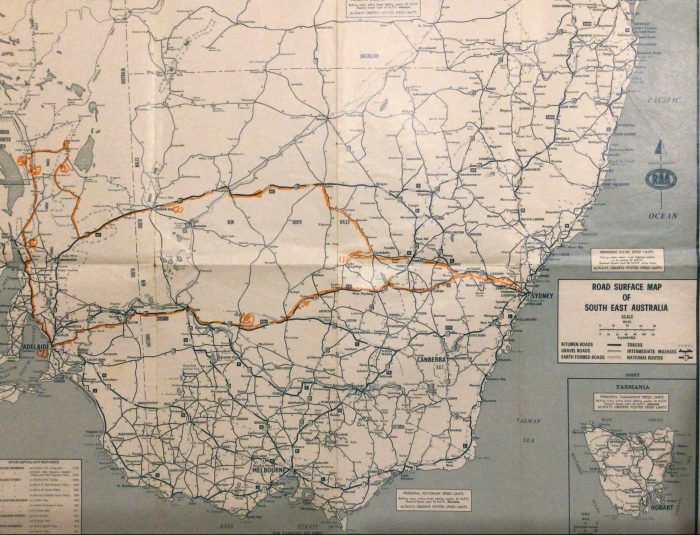
FIG 2 Map of Overall Trip in 7/1973
6 IMPATIENCE, CHECKS AND START OF TRIP To 13 and 17 year old boys any time to prepare for a holiday was painful, why can’t we go now, it was boring. Dad was into detail, and making sure all things were planned. We were going to go on some pretty rough roads, and so dad was determined to keep the car light. This reduced the likelihood of car damage.
The 2nd hand 1969 Holden was the car we were going to travel in. It had some modifications for outback, had been serviced, tyres checked and fueled up.
Whilst we did keep the luggage to a minimum, we still filled the boot and the bedding became cushions for Roger and myself, in the back seat. Tyre pressures were tested. Food in a lightweight foam esky was loaded, clothing, a special light-weight tent made by Mum, and essential tools were also loaded. We travelled light, but the essentials of water, food etc were included for any out of the way event.
We had no compass, phone or other communication on this and all our trips. Dad used the sun. Nothing was stored on the roof, and tools including a tomahawk were stored under the driver’s seat for ready use and low centre of gravity which turned out to be important in sand and flood. Once after crossing a flooded creek a bit too fast we heard “PST, PST, PST…” from the front of the car. Dad got out, saw a dented steel rim, used the back of the tomahawk to reform the rim – all with a delay of a minute and no further air or trouble.
Lunches and fruit were prepared by Mum to reduce stopping time and cost. It was particularly helpful when we were in the middle of nowhere, far from a local corner shop.
We had all been up getting ready for the trip since 6.30am. It was now 9.30, Roger and I were almost screaming by this stage. When are we going???
Eventually we saw light at the end of the tunnel. It was nearly 10am. The house was checked, newspapers cancelled, rubbish removed, windows locked, final check up to see we haven’t forgotten anything.
Yeah, we are off. At last, a half hour late ! That’s dad.
7 FIRST DAY OF TRIP – A WET SLEEP. Off west via Bells Line road, through Lithgow, Bathurst, Orange, Parkes and follow the Lachlan river to Condobolin and then to Lake Cargelligo – 600 kms by good roads.
We were aiming for Willandra National Park west of Hilston, but heavy rain had made all roads west to there impassible. Hence we camped our first night at Lake Cargellego in unexpected heavy rain.
Mum and dad were driven by pragmatic, solution focused approach to all things.
The types of tents that we could buy in the 1970’s were very limited. There were the small two or three man tents, or the large square canvas tents. Neither suited a family travelling light and long distances.
We did have a canvas tent that earlier on we used; however, it was bulky and heavy, particularly with the tent poles and if wet.. The advantage of the canvas tent was that you could stand up in it, and that it didn’t need a tree to brace it to. The two man tent was relatively light, but earlier trips had shown nowhere to cook in the rain.
Hence Mum made a super tent of lightweight easily dried waterproof material and which used the roof of the car as two supports and two lightweight bamboo poles for other support.
Mum and Dad slept in the car and Roger and I on blowup mattresses.
It was the first test of the tent that worked well, but there was so much rain and surface water I was going to float away. This was the first hint of things to come and not to plan.
8 TWO BOYS IN A CAR FOR 10 HOURS PER DAY
It was strange talking to my friends about the trip and the length of time in the car and the distances that were covered. My friends thought I was mad. Holidays for them usually meant travelling either up or down the coast a 100 or so kms and relaxing at a beach for the whole time.
Our family didn’t go on a standard holiday, we went on an adventure. It was exciting we felt like we were almost explorers. So for us to sit in a car for 10 hours wasn’t too bad. We didn’t ask to get out of the car every 2 hours or insist on things in the car to keep us amused.
9 MUM – “BLUE HILLS” AND DEODORANT
.1 Radio. Mum travelled well in the front seat and acted as navigator and drink supplier while dad drove. In a hot car on a hot day into the sun you needed a drink at least every hour.
For entertainment she loved “Blue Hills” (now think of an Australian “Days of our lives”)on radio. It didn’t matter where we were. Out in the middle of the Sturt’s Stoney Desert, not another car at all for over 10 hours, we could only get ABC AM radio – and Blue Hills. All of us except Mum in the car had to endure it everyday when it came on. That was the time we wanted the radio to break down, or we couldn’t get reception. That just didn’t happen. We just had to “grin and bear it”.
.2 Deodorant. In a hot car a bit of this helps. On a later trip from Bourke to Tibooburra to Innamincka along the Strzelecki Track and then onto Birdsville and Mt Isa. I mum needed another deodorant stick. We limped into Birdsville, after a crash damaging the linkage arm that controls the gear selector of the automatic gearbox. Dad, drove the car up the gutter in the main street front of the pub to get a bit more ground clearance so he could straighten the linkage arm using a tomahawk and tyre lever.
At the same time, mum went to the local general store to search for a new deodorant stick. Dad, Roger, myself, and finally mum all gathered in the Birdsville pub. We had lemon squashes, dad a Queensland beer XXXX and mum a shandy. Once freshened up, fed, and car fixed we camped and moved on to Mount Isa the next day. Mum went to use the deodorant stick but couldn’t – it was a hard dried out roughened stick. Obviously, the deodorant stick had been in the general store for some time, probably over a long hot summer and dried out.
We ribbed mum for the next couple of days being glad that the car windows were open, to prevent any smell (just kidding).
During these trips Mum put up with a lot. She was very understanding. I am sure mum’s idea of a holiday would be a bit more civilised. (Later at Mt Isa after 5 days of sun and desert we four stayed 2 days in the best pub and voted whether to go west to Catherine and then Alice Springs, or to go east to Magnetic Island. Guess who lost? Dad, he voted go west. That’s democracy)
10 DAY 2 – TO BROKEN HILL VIA A “DRAIN”. The blocked roads west meant a turn back to Condobolin, and then decide either bitumen to Narromine or a more direct way to Cobar on “dirt” roads and save about 150 km .
After enquiries we took the short cut through higher country (less creeks) to Cobar – 250 km away.. Virtually all of the road or track was not sealed but slippery light brown-red mud, slush and water, occasionally crossed by rivulets. Given the heavy rain we had to move quickly so that we did not sink or bog and had enough pace to plough on.. This threw up a lot of mud and the car became filthy with the only place we could see out of was the front windscreen where the windscreen wipers cleared the mud. It had 10 mm of mud on the roof. The car slipped and zigzagged along the ride. To Roger and me it was like an amusement ride.
We eventually got to Cobar, much relieved to be on paved surface again.A brief enquiry, refuel and check at the garage was a surprise. The attendant asked “Have you been driving up a drain?”. You could not see the engine or spark plugs as there too much mud. This proved to be very helpful later and gave us more confidence to continue and later tackle worse conditions.
The 450 km to Broken Hill on the bitumen Barrier Highway via Wilcannia went quick. A crowd came to see the car completely covered in mud. We stayed in a hotel on the main street of town which was a welcome relief for us all being wet, tired and needing a bit of TLC and drying out of a few things.
I can still remember we were on the first floor. I looked out the window to view the traffic passing. You would see the hotted up cars pace the strip, back and forth. Even then I thought life must be pretty boring, these cars would do the loops numerous times trying to impress the girls.
Mum and dad took the opportunity to review the planned trip into the Flinders Ranges. This was slightly altered by subsequent events to the route and camp sites shown on Fig 3.
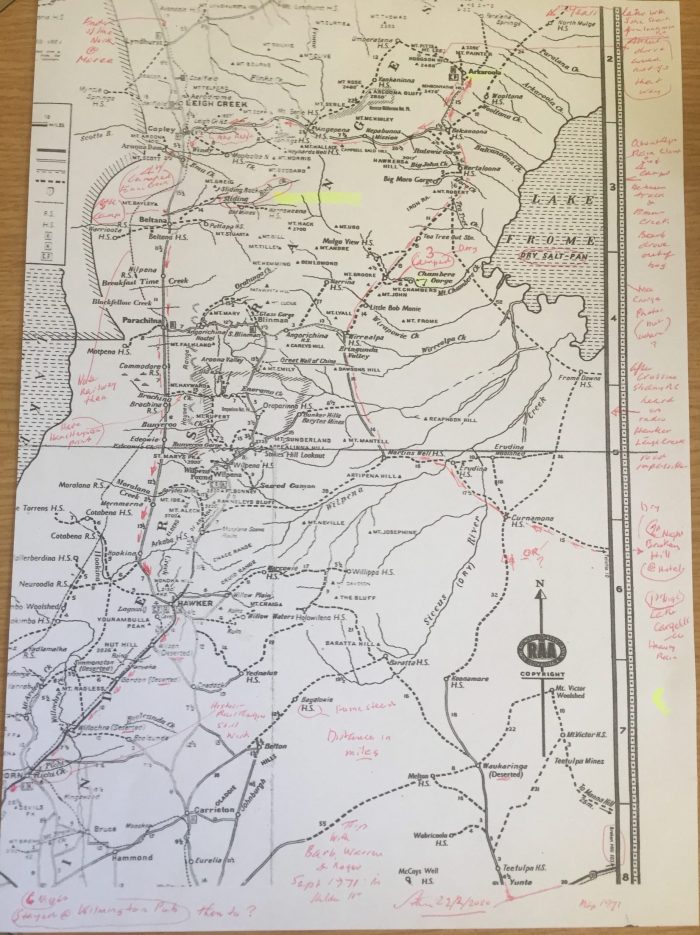
Fig 3. 1970 Map showing Route and Camp Sites for Nights 3, 4 and 5 in Flinders Range
(Trip is shown in Red staring from bottom right at turn North at Junta off the Barrier Highway
from Broken Hill. This Map was printed in 1971 and is now different from current maps. Leigh
Creek town has been moved south to a little north of Emu Creek, and the road has been
sealed, named Outback Highway and crosses Sliding Rock Creek about 10km downstream
from our crossing.)
11 DAY 3 TO CHAMBERS GORGE, FIRST CAMP IN SA. The next day was warm and sunny. We looked over Broken Hill city and surroundings and took it easy with about 200 km on the sealed Barrier Highway into South Australia. Then we turned north at Yunta on a dry dirt road for about 250 km and camped in Chambers Gorge about 15 km west of Lake Frome (dry salt pan 0.5m deep). The camp site was ideal, quiet with early spring flowers around us and a clear sunny day. We really relaxed. Later we learnt it had been a favorite spot for early aborigines and that we missed seeing their rock carvings.
12 DAY 4 BIG STORM Firstly in the sun to Arkaroola near the northern end of the Flinders Ranges for lunch. There we turned back about 20 km as the track to the north- west was a really steep 4 wheel drive; then west to the north west side of the Flinders Ranges again by a rocky, rough, dirt road. At Copley just south of Leigh Creek, as big storm clouds showed ahead, we drove south on the main dirt road (now bitumen and called the “Outback Highway”) to the first first turn off track (see Fig 3) to quickly pitch the tent and have some tucker. This was about 5 km East of Lake Torrens and close to the south side of then dry Emu Creek behind a couple of bushes 400 metres off the track to Aroona Dam and about 1 km west from the “highway.”
Surprise surprise soon it rained again – very heavy. It was like a repeat of Lake Cargelligo and about midnight the creek was noisy flowing with water. Dad checked we were safe from the creek and tried to move the car a few metres onto level ground but the wheels slipped as the dry dirt site had turned to slippery mud and we were bogged. So back to bed for an early morning and how to get out.
Getting out of a bog is often not easy – we had proved this in sand near Bourke and Wills memorial next to Cooper Creek. Much later dad and 2 mates learnt a bit more – bogged for 4 hours north of Innamincka in the only wet place in the semi-desert. Greg remembered walking across the drained Coburg Lake when his grandpa broke through the dry surface and got bogged in sticky black mud.
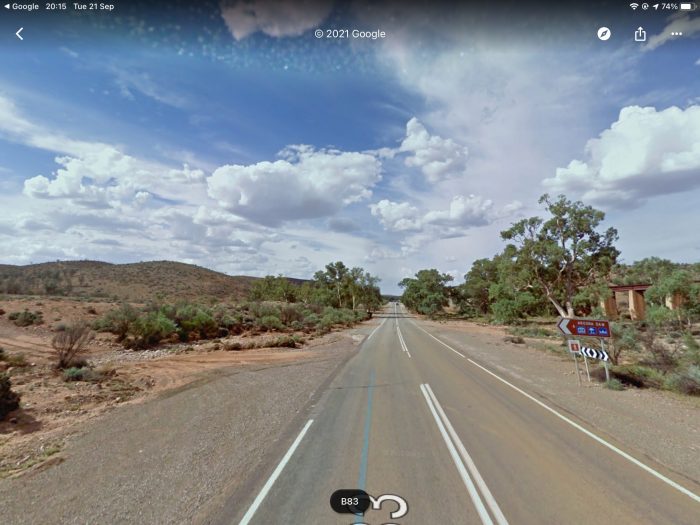
Fig 4. Turn-off for Night 4, Big Storm, Very Wet Night and Bogging
(Google photo about 2020, showing turn-off to left, sign on right now changed from Emu Creek to
Aroona Dam, track no longer dirt but now called Outback Highway and. Rail bridge on right.
Shown looking north, we came from the north)
13 DAY 5 EXCITING As we were bogged on sloping wet ground, we had an early quick breakfast and started to pack while thinking how to get back to the dirt (mud) track about 40m slightly upslope. Dad and Rog collected stones in the light rain, put them under each rear jacked-up tyre and cleared the front of the front wheels.
Mum was given the task of driving straight for about 10 m and turning left to miss big rocks while Dad and Rog pushed, and I held the tent up. Mum’s great exploit of driving out still in the rain surprised us how she dodged the rocks. Mum had her drivers licence for years, but in all the time I was living at home I never saw Mum drive, except this one time.
In light rain on the track back to the “highway” we met 2 cars held up by 2 flooded creeks). They were only 20 m wide, but light brown, no posts and unknown depth etc.and flowing fast. Dad only had boots on his feet, and walked across on one side where the track might be and back on the other to check on the depth, washaways and rocks which might cause problems. Then told them it was clear, only 300 mm deep and how how to drive and where to aim for, and checked that both cars got across in case the electrics caused problems. They evidentially had been out to a camp spot at a fresh water Aroona dam at the salty Lake Torrens and were going back north on the Outback Highway. At each creek we crossed after the others.
Then we drove south about 30 km on the dirt (mud) highway (now Old Beltana Road), when the real fun started at a creek or river. It was Sliding Rock Creek. We were the first there at about 8 am on Friday. This creek was flowing fast and about about 150 – 200 m wide. Dad thought it might be a bit deeper than the others so he found a stick to hold him up doing the same testing as before. When in about 50 m and about 500 mm deep, the stick didn’t hit bottom and he was nearly washed over but luckily didn’t. We put a rock at the waters edge to indicate if the water was rising or falling. Unfortunately it rose a little bit, and we were stuck and decided to camp for the day hoping the water would fall to let us across later.
Then the “fun” started with a variety of about 10 travelers trapped with us on the north side of the creek with none on the south side.
The first was another family, and dad advised them of the situation and that it was impossible for us to cross and would be dangerous now as the road had been eroded away in about 50 m to give a water depth over 1 m.
A few others arrived during the day including 3 aboriginals in a Valiant ute going to a wedding the next day at Hawker. Dad told them it was too deep, but they had crossed the creek a few times on other days and so drove in. Fortunately the Ute stalled in about 20 m. They then opened the doors, got out and water flowed through the car. They were well dressed and so looked funny casually walking out of the brown flowing water. Dad was concerned the creek might keep rising as it was still raining a bit. He borrowed and threw them a long rope which they tied to the rear half bumper. Another vehicle started to tow them but the Ute’s bumper just pulled out, so another attempt was made, which was successful. After a few hours the sun came out and the Ute’s electrics dried out and they could drive again.
A pig shooter told us we would not run out of meat as he showed us 5 dead wild black pigs in the back of his ute. He asked us if we would like some food for the night, but the pigs didn’t look appetizing, so Mum and dad politely declined his kind offer. We had sufficient provisions.
For more excitement in the afternoon the first vehicle came to the south side of the creek. It was a daily? bus that probably went to Leigh Creek and Maree. We waved to the lone driver to warn him of the missing bit of the road but the driver also had driven across it a number times and so started to cross. The water noise and distance stopped him hearing us. The bus got to the danger spot and the front wheels crashed into the deep water with a large bang which shook the whole bus and sprayed water forward. It then lifted up and came forward the last 50m to dry land with us and the driver stopped to check what the damage was. He still had front wheels and the tyres seemed ok so he resumed his journey. Lucky it was a rear wheel drive.
We had lit a camp fire and Mum made lunch and dinner (tea), and when dark all went to bed .
Roger and I slept with Mum in the car while dad pitched a small tent in the bush
This is when Mum, Roger and I had a bad night in the car while Dad slept in the nearby bush. The aborigines had plenty of rum for dinner and during the night ran their Ute up and down the track, possibly to keep warm and dry and not try to sleep sitting up. This kept us awake, and one poked his head at Rog’s window and frightened him – all while dad slept. Mum wasn’t happy with him, while dad thought he had done the right thing sleeping with the snakes?
Crossing of Sliding Rock Creek
(Google 2022. It was more flooded when we crossed from north (top) in 1973. Road is still dirt and
now called Old Beltana Road)
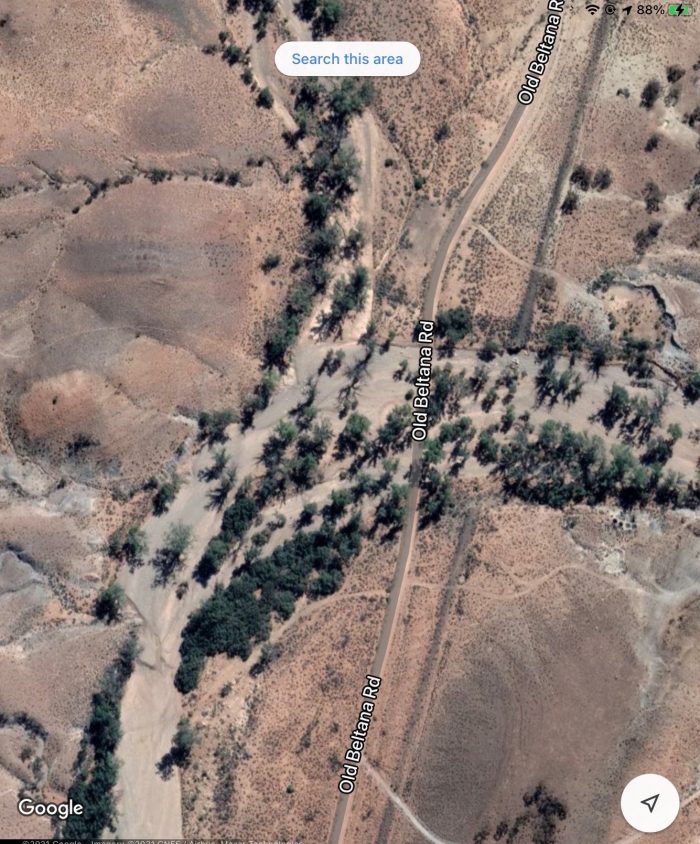
Fig 5 – Googles photo of Sliding Rock Creek crossing. Dark, straight line on map could be later pipeline.
14 DAY 6 VERY EXCITING TO WILMINGTON AND LUXURY The next morning was a fine and we noted the creek had dropped about 100 mm; then had an early breakfast.
About 10 am two chaps came in a high diesel Land Cruiser. They were surveyors, knew the creek well and told us and would show us how to get across. They slowly drove into the water for about 20 m and then turned upstream for about 100 m just passing a large gum tree, all where the water was only 200 – 400 mm deep. Then they turned about 45 degrees downstream across and with the current, reaching the opposite bank after going through water about 700 – 800 mm deep.
They waited for a truck to follow suit and then we, the first sedan car, did the same. All had been ready to help if we got into trouble and we unbuckled belts and opened windows to get out quick if we floated, rolled or stalled in the deep part. Dad said he thought if he had his elbow out and on the door it might have got wet.
In this way nearly all had crossed, before we drove south crossing some shallow creeks a few times. At one we saw the wreck of a car downstream, which had been washed off the dirt road. On the way to Hawker we heard on the radio that the Leigh Creek road was impassible to all traffic including 4×4; and at Hawker saw a tow truck with a Land Rover which had been washed down stream somewhere. You need to be very careful in such floods – and be lucky.
That afternoon we reached Wilmington where we stayed in the old historic pub – again partly to dry out, clean up and all relax and to have a good sleep. Rog can remember the red carpet upstairs to our 2 rooms.
There we talked how it all had been done. It was a lot of luck and many factors:
* the car had good ground clearance and electrics well proven many times earlier on the trip.
We had not stalled as the mud and hot engine helped; and the drip tray under the engine
helped keep water from the fan when the car was driven slowly and at constant speed. (On
a later trip the steel drip sheet acted like a skid plate on a rally car to protect the engine in a crash through rocks south of Birdsville).
* keeping the car in low gear and constant speed helped make sure no water entered the exhaust pipe.
* the city tyres were at usual pressure and not bad; and the door seals were reasonable and holes in the fire wall were blocked with mud
* if impassible, find another way. (The surveyors did that for us)
* checking or knowing (ie”look before you leap”) what was hidden in the water was critical. Walking helped but at Sliding Rock the surveyors proved the route for us all. There were no serious rocks,
hidden branches or deep trenches or wash-aways as sometimes downstream at causeways.
* traveling partly with the current helped push the car and helped prevent a roll-over from side-on water force. The low centre of gravity of the loaded car with 4 of us also helped against this and against floating and losing traction.
* we all felt we could do it and were ready for emergency. There was no panic; and lucky.
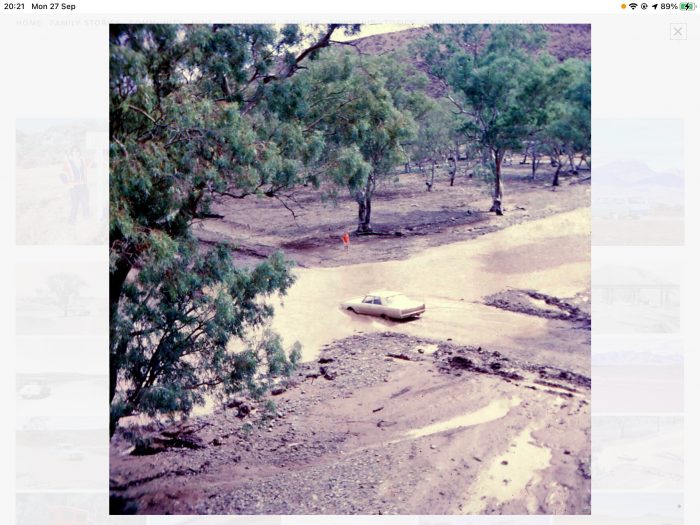
Fig 5 A Typical Shallow Crossing (Google 2022)
15 DAY 7 EASY TO ADELAIDE AND MORE LUXURY. Another motel – in South Terrace. I can still see the red and black dirt piles on the concrete car park where our car was parked. There was a bit of rain. Only some of the dirt came off. There was too much, and baked on hard. You could not see the motor at all as there was so much mud still baked on. This had proven to be very beneficial.
16 DAYS 8 & 9 – BACK TO HOME. Great to get back to the big smoke via motel at Balranald – with “our batteries recharged”.
17 OUTCOME OF TRIP
.1 A Learning Adventure The 8 day leisure trip turned into a great 9 day adventure.
On reflection we all enjoyed it even though there were a few very trying times. We all learnt a lot more about ourselves, outback people and travelers, cars and nature in a great beautiful yet a wild tough big country. Reminds me of the poem:
“My Country” by Dorathea Mackellar “I love a sunburnt country, A land of sweeping plains, Of ragged mountain ranges, Of droughts and flooding rains. … The wide brown land for me! A stark white …”.
.2 Writing This Story. All my brothers and dad helped. Its not easy recalling events nearly 50 years ago. All things change.
New Google text, maps and photos did not agree with dad’s memory which can be fantastic (split pins in WW II), and hopeless (about his wedding day to Mum). Then his old maps disagreed also. However both old and new were right. They had moved the town of Leigh Creek south to the north side of Emu Creek not far from where we camped and were bogged on the south side of Emu Creek. Also the main road had been bitumenised and moved west 10 km to follow and service the rail track which had gone through Leigh Creek to Maree, the southern end of the then famously tough Birdsville Track – in sand storms you could get buried.
Appendix A gives Google details on Leigh Creek’s origin and move. In 2021 the mine became the construction site for a big urea plant.
.3. RFD. After this trip Mum realised what a friend of hers had advised, and we donated each year to the Royal Flying Doctor Service. We never had to use them but went close, and when at Royal Adelaide Hospital Mum and Dad saw an outback wife whose husband had just been brought in with his back broken.
.4 Driving Outback. See Appendix B. It sounds easy but there can be unexpected traps. We have experienced most of the following :
* Car breakdown for various reasons (fatigue break of main leaf spring and very sudden braking of car, timing gear break and 2 days delay , punctures, door nearly fell off but stopped by Rog and the use of a bolt from another door – but cars are pretty reliable these days);
* crashes (driver or both error, tired, not resting, not looking properly, distracted; need to be careful going over sand dunes not knowing if the track turns or what’s coming on the same track – a tall aerial helps. Hitting kangaroos wallabies, eagles, wild pigs, cattle, emus etc );
* bogged; bull dust; sand; rarely ice or snow; sun; flood; fire; wind; rock damage (window, headlights and fuel tank; land slides; road too steep or rough for a 2-wheel drive small car,
* driver gets too hot or dehydrates.
* one wire.across a track instead of cattle grid,
* driving into sunset with splattered insects on screen, or with brown cattle blending in with dark hills. Dad did this in Queensland and unintentionally went between the leader of the herd,
* some get car sick but not us.
* backseat drivers – Dad said he could only remember 2 complaints when driving or being driven – Mum said she would divorce Dad who was being tooted when driving illegally a British campervan in heavy traffic in central Paris. The other was not an Ambrose for going too fast.
* on one occasion into an area where people had recently been shot and a killer loose. We were unarmed because we were going through national parks where guns are not permitted. We took special precautions and the car colour helped. Later we learnt it are was called “Death Highway”.
* maps and signs are sometimes not right or non-existent. One was 100 mile out and we reported it.
* we never had a phone or compass but would have liked one above the Tropic of Capricorn.
.5 Outback People. This trip and all others we made showed the great spirit of these people, and it becomes infectious.
Firstly the aborigines have been fantastic to live in such tough, dry country and look after it. Dad says he understands how they feel about the land – he feels the same. We leave our camp sites as clean or better than when we arrived and only kill mosquitoes.
Explorers going into the unknown were game, took huge risks and suffered great hardships. Some like Bourke and Wills didn’t make it back.
When you see old ruins and graves in the far outback you wonder how the whole families lived. Two days ride to your nearest neighbour for any help. They were marvelous and helped each other. This has become an unwritten rule to help anyone in trouble. Mutual help. Mateship.
The pace of living out there is different from that in the city. Nature has its effect and people seem to take things a little slower- maybe the environment makes the difference. The delay at Sliding Rock was just a little example of this.
.6 Lessons A lot of lessons came for us all from this adventure in this trip to the Flinders Ranges in 1973. It gave confidence and better understanding to tackle 3 deserts to get to Mt Isa in 1975 in the same car with another big adventure.
Dad recently said that he is not sure if he would do this crossing like that again. Things change with time.
.7 Wish. I would have liked this to be a small movie and hope it will come about. In the meantime I hope you enjoy and learn from the above.
18 THANKS. To all involved in this great adventure especially Mum, and Dad, Roger and Greg for helping me in this note. Warren 11/11/2023
APPENDIX A BRIEF HISTORY OF LEIGH & SLIDING ROCK CREEK (Google 2020)
Situated approx 600 kms north of Adelaide lays an “Oasis in the desert” known as
Leigh Creek
The climate is typical of the arid Australian inland and temperatures can range from 0 to 50 degrees centigrade. Due to the warmer climate conditions the best time of the year to visit Leigh Creek is between March and December.
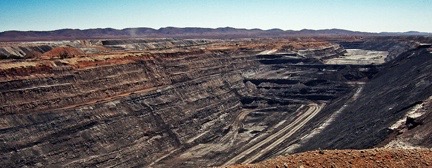
Leigh Creek Coalfield
Aboriginal people called coal deposits at Leigh Creek “Yulu’s Charcoal” long before white men came to this country. The story of Yulu’s Charcoal tells of huge fires being lit and burning the trees, the remaining charcoal forming the coal deposits.The area was named Leigh’s Creek in 1856 after its first settler, Harry Leigh.
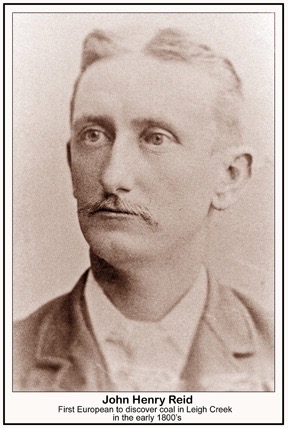
Coal was first discovered by Europeans in Leigh Creek in early 1888 byJohn Henry Reid. After over 50 years of disappointments and setbacks, large scale mining began in Leigh Creek in 1948 by the Electricity Trust of South Australia.A lot of that credit is due to the hard work and persistence of the then Premier, Thomas Playford, in an effort to make South Australia more self-sufficient for its energy needs, with less dependence on New South Wales. He saw the need not to rely on interstate energy if he was to attract business to SA.The town to support the mine at that time was called Copley, after William Copley, an MP and Commissioner of Crown Lands. The original town was located within the coal basin, so it was decided to build a new town and mine the land that the original town was built on.
In 1976 the Electricity Trust of South Australia (ETSA) had selected a location south of the coalfield. Landscaping was established in 1977. Construction started in 1979 and the first house was occupied in 1980. The construction of a new airport happened in 1981 and by 1984 the town of Leigh Creek was completed 22km south of the coalfield. This massive undertaking gave ETSA a unique opportunity to construct an “environmentally friendly” place for its 2000+ residents.
The early water supply for the town of Leigh Creek came from Sliding Rock, more than a century after the original copper mine was inundated with water and both the town and mine were abandoned. In 1955, Aroona Dam was built. Since then the town and coal mine use water from the nearby dam, south-west of the township. A reverse osmosis plant also provides water drawn from bores when the water level in Aroona Dam is too low due to rainfall in the area, as the average annual rainfall is less than 200mm. The waste sewage from the town is used to water the ovals, parks and trees around the town as well as watering the local golf club during winter months. Some 250,000 native trees were planted when Leigh Creek was built and many more were planted in an ongoing program over the years since the town has existed. Many trees were propagated in the town’s own company owned nursery which has since been closed down.
If you take note of the street names in Leigh Creek you will find that they are all names of Australian Native trees with a large number being Eucalypts family names. Each street has some of the trees it has been named after planted along it.The distinctive rock mulch you see all along the footpaths is used as a means of keeping the weeds at bay and was all obtained from Windy Creek to the south of the town. It is only in the last few years that Leigh Creek has decided to “open up its doors” and welcome in tourism. Prior to this the town was considered to be a “closed” town. All the housing in Leigh Creek is built to face north and south and massive plantings of native trees and shrubs thrive thanks to the recycling of the town’s water from the nearby Aroona Dam. The dam is accessible via a turn off 3 kms south of Leigh Creek at Emu Creek. With the thoughtful use of this precious resource it is no wonder the locals refer to Leigh Creek as an “outback oasis”.
The core business for Leigh Creek was mining. Mining is still the major industry, however tourism and hospitality are allowed to co-exist. In the last few years the Film Industry has become very interested in the area and has used Leigh Creek as a base camp for their crews. Due to the changing of mining methods in the last few years and the purchase of larger mining equipment the population has dropped to its current size of around 600 residents, most of whom work for the company as full time or contract employees rostered onto an average 12 hour shift. Other people living in the town work at the School, Hospital, Tavern, Cafe, Service Station, Supermarket, Post Office or for any of the other businesses in and around Leigh Creek. It is the mine policy that you or your partner needs to have at least 20 hours paid work in the town before you are allowed to reside here. Once you have retired from the workforce, you must move on.
Due to the downsizing of the town some of the houses here have already been sold in a series of auctions. The land that the houses sat on has been returned (as best it can be, or even better) to its natural state after each of the areas has been cleared.
Update 2023 Mining perations at the Leigh Creek mine ceased on 17/11/2015.
In 2022 media reported that LCR Energy, now renamed NeuRizer Ltd (NRZ) a new company, was formed to progress the Leigh Creek Project to build a large carbon-neutral plant on the site to make Urea–based fertilizer for local and export agriculture. Urea is a chemical compound that is widely used in a variety of applications, including fertilizers, animal feed, and the production of plastics and other industrial products. Maybe AdBlue, an additive composed of deionised water and urea used for pollution control of diesel engine exhaust – as Roger does.
We never saw either Leigh Creek towns – the 2nd was not built on this trip.
APPENDIX B MORE ON DRIVING OUTBACK
B1. Warren’s First High Speed Driving. A cattle Grid, scared the hell out of everybody on one trip.
Outback AU is very flat and some virtually dry rivers and creeks can flood to 50 km wide. Hence in some places you can drive on two types of unsealed roads; Wet and Dry (weather)
The wet road is elevated above the general layout of the land; this road works well because the water can run off and is often above floodwater. Such roads are in areas where there is little no fencing to restrict movement of wildlife, cattle and sheep which roam freely.
Every 3 to 20 km or more a property boundary approaches. On our 1975 trip from Innaminka to Birdsville, about 500km, our early road notes dad recently found, lists about 32 gates and grids but not one crossing which had one wire across the track and forced our urgent braking and then waiting about 5 minutes for the dust to settle. Dust and gates in one case determined the quickest route if there was only the driver. Getting across a grid is much quicker but cost more to install. (When crossing a remote State border much earlier we saw 2 piles of bottles on each side of the gate – a stop is good for a drink.especially in rough country. Later light tinnies reduced such piles.)
Cattle grids are the better mechanism to stop livestock from moving between fenced fields. A cattle grid is trough across the road, at the fence line. A series of worn rail line are placed perpendicular to the flow of the travel. Motor vehicles can cross the rail tracks but live stock find it difficult because of the space between the rails. The trough is around 1200mm and includes probably up to 10 rails, leaving space of about 180mm between each rail. The space between fences can be as little 3m to handle big trucks .
A race is another way to discourage livestock from moving between paddocks. A race is fencing that is perpendicular to the fence, and is parallel to the road for approximately 20 meters. Live stock are discouraged because there is a long narrow access between paddocks.
Cattle grids and races are often on the wet-weather road.
The Dry road is actually the drain on both sides of the wet-weather road which is gravel based and is not as smooth as the dry road. Hence only when dry, most people use the dry road when they can. The dry road is a sandy and dusty base, not very stable, but smooth. You need great care driving along this road and not make violent or sudden change in direction.
Dad was a very supportive father who would encourage development and to accept challenges to his kids. Radically, dad let me drive the Holden Kingswood out of town much like most country kids on farms. There is very little traffic and dad viewed it as a great way to teach the kids as they requested.
Anyway, I got to drive the Kingswood, on both wet and dry roads. Our family were never the slow and steady drivers, we liked to keep the pace up to handle the long distances. So did I and clearly remember travelling around 100km/hr on the dirt at the age of 14 years. Wild.
Part of the driving on these roads involved driving on the dry roads. Then moving up to the wet-weather road to cross the cattle grid where you needed to slow down as the wet road was approximately 1.2m above the dry road.
On one occasion, I am sure all of us needed a change of underwear, because as a young person you don’t always think and look ahead. Well, this time I was roaring along at about 100kph on the dry road and suddenly realised I needed to get up to the wet road to go through the cattle grid. I did go through the cattle grid and across to the dry road but did not slow down. Fortunately I did not panic and kept it smooth, but it was close. I think dad thought it was time for me to let him drive again. Not surprised. I was shaking, but I think it was a lot scarier for the rest of the family.
B2 Dads driving. Dad going over sand dunes with wire across track at bottom of dune . Full brakes and wait 5 minutes for dust to settle and move the wire.
Dad going off road and stopping just short of a 1.2 metre diameter boulder
Driving 10 hours between Innamika and Birdsville without seeing a single car, only one goanna
Dad rally support vehicle for Greg, catching up to competitors.
B3. Post script My ex and I went to Mungo – drove quickly, bush bashing and circumnavigating NSW, getting bogged west of Wannering at 6pm in Bulloo Overflow.
APPENDIX C
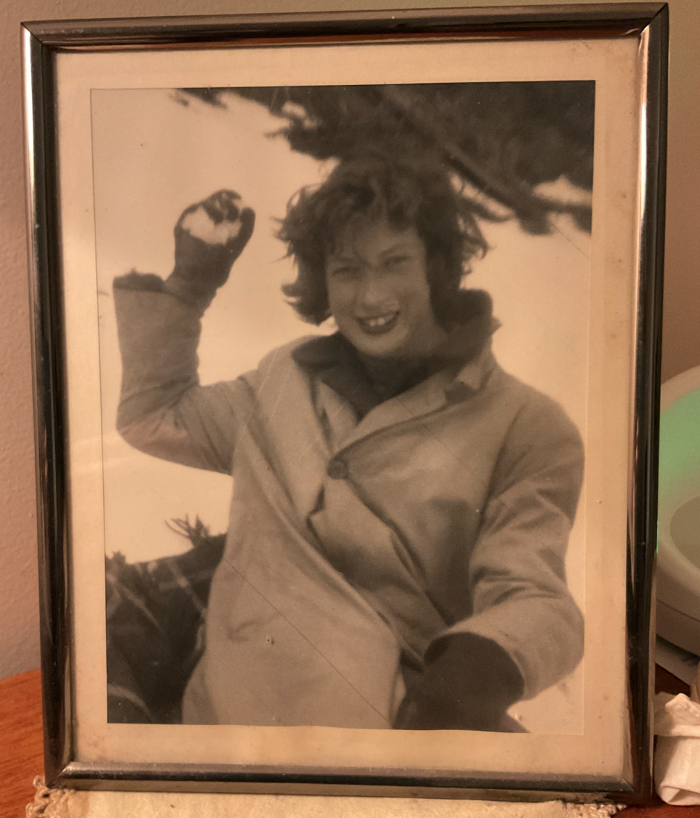
Photo 1 Barb 1949 at Mount Matlock pregnant with Greg
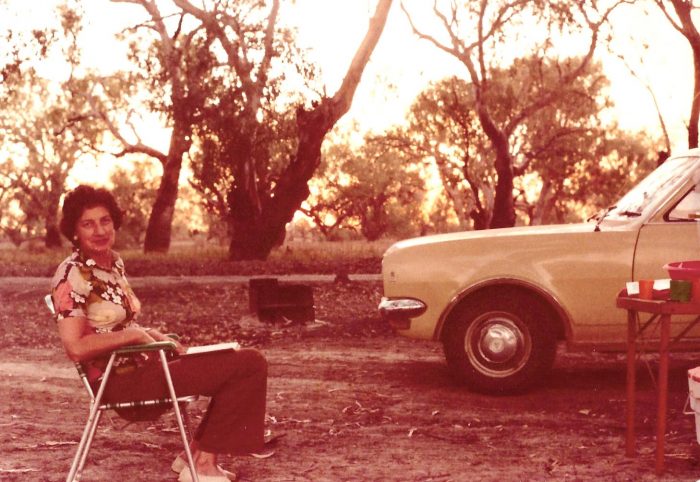
Photo 2. Our car with Mum in outback gear
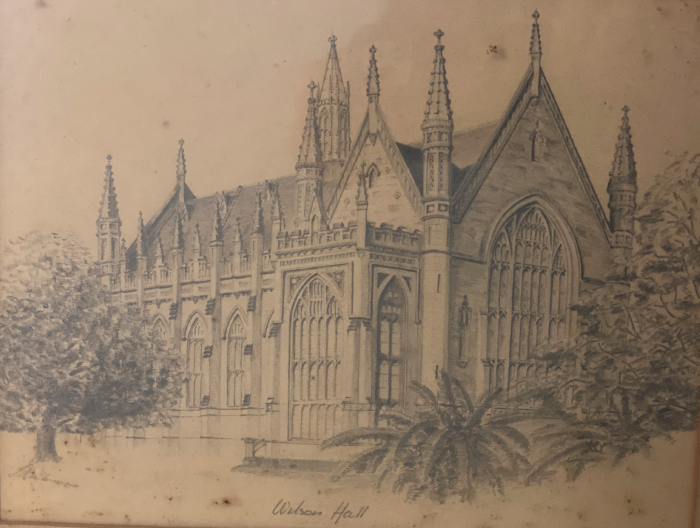
Photo 3. Wilson Hall